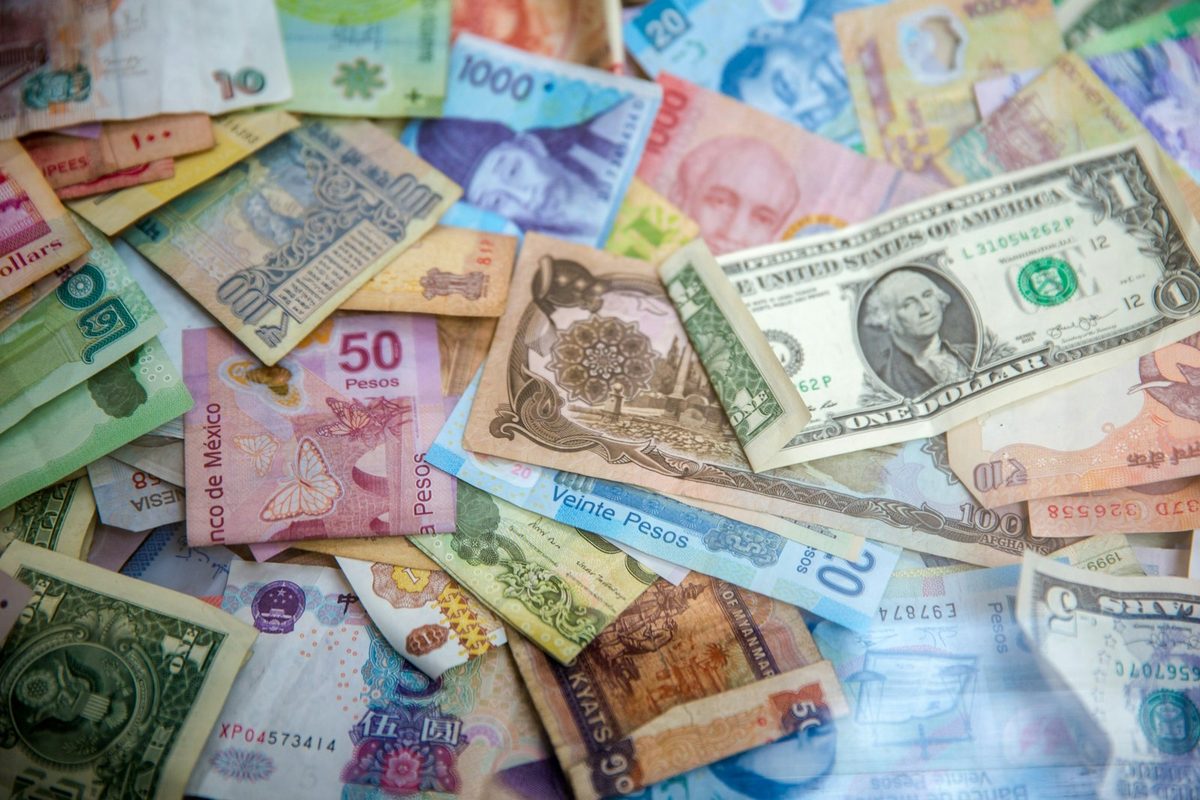
Every forex transaction is a trade in a pair: you buy one currency and sell another at the same time. That simple structure is easy to say and easy to misunderstand. The way a pair is quoted, the typical spread, the pip value, and the hours when liquidity is deepest all change from one pair to another. A habit that feels manageable on EUR/USD can be much more expensive or more volatile on a thinly traded cross.
This article explains how pairs are organized, how to read a quote, what majors, minors, and crosses are, and which practical details matter when you compare instruments. It is a reference for study, not a list of pairs to trade.
How a Currency Quote Is Built
In a pair such as GBP/USD, the pound is the base currency and the US dollar is the quote currency. The price tells you how many units of the quote currency it takes to buy one unit of the base. If GBP/USD is 1.2700, one pound costs 1.2700 dollars. If you buy the pair, you are buying pounds and selling dollars. If you sell the pair, you are selling pounds and buying dollars.
Most major pairs are quoted to four or five decimal places. A pip is usually the fourth decimal place, so a move from 1.2700 to 1.2710 is ten pips. Yen pairs are typically quoted to two or three decimal places, and a pip is the second decimal. Some brokers also show a fractional pip, sometimes called a pipette. Knowing the pip size is essential for position sizing, because the money value of a pip depends on the pair, the trade size, and the currency of your account.
Majors, Minors, and Crosses
Market language groups pairs for convenience. The major pairs usually combine the US dollar with another widely traded currency, such as EUR/USD, USD/JPY, GBP/USD, USD/CHF, AUD/USD, USD/CAD, and NZD/USD. These pairs often have tighter spreads and deeper liquidity, especially during the London and New York sessions, though conditions still change around news and holidays.
Minor pairs and crosses typically do not include the US dollar, or they combine the dollar with a less heavily traded currency, depending on how a broker classifies them. Examples of crosses include EUR/GBP, EUR/JPY, and AUD/NZD. Crosses can be useful when you have a view on two non-dollar currencies, but they may have wider spreads and different liquidity patterns. Exotic pairs often include a currency from an emerging or smaller economy paired with a major currency. Spreads can be much wider, gaps more common, and overnight costs more significant.
Spreads, Swaps, and the Cost of Switching Pairs
The spread is the difference between the bid and the ask. It is a core trading cost and tends to be narrower on liquid majors during busy hours, and wider on exotics, during rollover, or just before a major data release. Two pairs can look equally “active” on a chart while having very different costs to enter and exit. Overnight swap rates also differ by pair because they reflect interest-rate differentials and the broker’s charges.
Before you add a new pair to a watchlist, look at typical spreads at the time of day you would trade, the average range, and whether important news for either currency tends to cause sudden jumps. A pair that moves a lot is not automatically a better choice; wider spreads and slippage can consume a large part of that range.
Correlation and Hidden Overlap
Pairs that share a currency, or that respond to similar economic forces, can move together. AUD/USD and NZD/USD often show related swings when risk appetite or commodity prices change, though the relationship is not fixed. EUR/USD and GBP/USD can also move in the same direction when the dollar is the main driver. Opening several positions that all depend on one idea — for example, a weaker dollar — can multiply risk even if each ticket looks small.
Correlation changes over time. A relationship that held last year may weaken after a policy shift. If you hold more than one position, review the combined exposure rather than judging each trade in isolation.
Sessions and Which Pairs Tend to Be Active
USD/JPY and some Asia-Pacific pairs often see more activity during the Tokyo session. EUR, GBP, and CHF pairs typically become livelier as European markets open. North American data can move almost every dollar pair. This does not mean a pair is “closed” outside its main session, but liquidity and the character of moves can change. Trading a thinly traded cross late on a Friday may involve worse prices than the same idea during a liquid overlap.
Conclusion
Currency pairs are the basic unit of the forex market. Learn how the base and quote are arranged, how pips are measured, and how majors, crosses, and exotics differ in liquidity and cost. Pay attention to spreads, swaps, session hours, and correlation so that a new pair does not silently increase your risk. Understanding these mechanics will not tell you which way a pair will move, but it will help you compare instruments honestly and avoid treating every chart as if it had the same cost and behavior.
Risk disclaimer: Forex and other leveraged currency trading involve a substantial risk of loss and are not suitable for every investor. You can lose some or all of your capital, and losses can exceed your deposit when leverage is used. This article is for educational purposes only and does not constitute investment, trading, or financial advice. Past performance is not a reliable indicator of future results. Consider your own financial situation and, if needed, seek independent advice before making any trading decision.